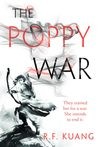
Looking for something to read after R. F. Kuang's trilogy? Every book below has been recommended to Poppy War readers by Instagram book creators or book websites, or is regularly recommended alongside it by readers on Goodreads and Reddit. Each card says which. None of them is a copy, so each card also says what is different. The list is spoiler-free; the essay on the history behind the trilogy below it is not.
The closest matches
The books recommended most often.
 The Sword of Kaigen
- Like The Poppy War
- Asia-inspired setting, an invasion, extraordinary powers and what war costs one family.
- The difference
- a household under invasion, not an academy.
 Jade City
- Like The Poppy War
- Asia-inspired setting, power and loyalty, and what they cost the people who hold them.
- The difference
- clan war and martial arts in a modern city.
Also onBooks like Red RisingIf You Like This Game or War Film, Read This Book
 She Who Became the Sun
- Like The Poppy War
- a survivor takes her dead brother's identity and fights her way to power in a reimagining of the rise of the Ming dynasty.
- The difference
- quieter magic and more intimate stakes.
- Awards
- British Fantasy Award for Best Novel and Best Newcomer, 2022; Hugo Award nominee.
Also onMilitary Fantasy Books
 The Rage of Dragons
- Like The Poppy War
- a driven young soldier inside a violent hierarchy.
- The difference
- revenge drives it, and the historical roots differ.
- Awards
- Named in TIME's 100 Best Fantasy Books (2020).
Also onMilitary Fantasy BooksBooks like Red RisingBooks like The Will of the Many
 Red Rising
- Like The Poppy War
- an underdog from the lowest caste fights his way into the elite, and the cost of that climb.
- The difference
- science fiction on Mars; book one is a brutal contest, and the wider war comes later.
Also onBooks like The Will of the ManyBooks like Dungeon Crawler Carl
Empires, rebels and the price of power
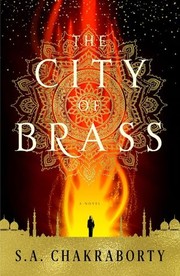 The City of Brass
- Like The Poppy War
- an outsider is drawn into the dangerous politics of a divided magical city.
- The difference
- court politics and djinn, not a battlefield-first story.
 The Grace of Kings
- Like The Poppy War
- Asia-inspired setting, rebels and rising states, with the sweep of history.
- The difference
- political and historical breadth rather than one young soldier's story.
- Awards
- Locus Award for Best First Novel, 2016; Nebula Award nominee; named in TIME's 100 Best Fantasy Books (2020).
Also onMilitary Fantasy BooksBooks like Red Rising
 Blood Over Bright Haven
- Like The Poppy War
- a city's prosperity turns out to depend on slaughtering another people.
- The difference
- set in a scholar's lab, not a war, with a dense magic system that slows the plot.
The Water Outlaws
- Like The Poppy War
- an imperial weapons instructor is branded a criminal and joins mountain outlaws, in a reimagining of the Chinese classic Water Margin.
- The difference
- outlaws fighting the empire from outside, not an army from within.
Dark schools and dark turns
 Nevernight
- Like The Poppy War
- a young woman trains at a deadly school on a path of revenge.
- The difference
- an assassin's revenge, not a war; bloody, with sex and plenty of swearing.
 Red Sister
- Like The Poppy War
- a girl trained as a warrior at a convent school, then drawn into church and imperial politics.
- The difference
- warrior nuns and church politics, not a national war.
 The Shadow of What Was Lost
- Like The Poppy War
- old secrets and a plot that pulls the rug out from under you.
- The difference
- prophecy and puzzle-box plotting rather than war trauma.
Also onBooks like The Will of the Many
Gray morality and brutal factions
The History Behind The Poppy War
Spoiler warning: this article discusses major events in The Poppy War, including the ending.
R. F. Kuang seems to have taken “write what you know” as permission to make her history degree more useful than the reader would like. The twists in The Poppy War have sparked some anger, but she’s translating human horrors into fantasy and showing us what our ancestors—and likely many of us, given the same circumstances—are capable of.
Just as Tolkien drew on Finnish, Norse and Old English languages and cultures, Kuang drew on Chinese history when writing The Poppy War. The plot, she has said, is “mirrored almost entirely on the Second Sino-Japanese War.”1 That war began in July 1937, when fighting near Beijing escalated into Japan’s full-scale invasion of China, and ended with Japan’s surrender in 1945.2 It became part of the wider Second World War, though the fighting in China began two years before the war in Europe. Book one draws directly on the Battle of Shanghai, the Nanjing Massacre and Unit 731, the Imperial Japanese Army’s center for biological warfare and human experimentation.3 You don’t have to look very hard to find Japan and China here. The Federation of Mugen, a small, militarized island empire, basically Japan, invades the Nikara Empire, a vast neighbor whose provinces answer to rival warlords as much as to the throne, basically China. The novel depicts the atrocities directly, including massacre and human experimentation.
Readers have criticized Kuang for her portrayal of the Nanjing Massacre, particularly because the story starts with a more traditional outsider-goes-to-a-magic-school arc that resembles Harry Potter. Readers and reviewers made that comparison,4 and it is easy to see why. It also leaves you rather poorly prepared for what follows. Just as war is sudden, disastrous and traumatic, so is Kuang’s turn in The Poppy War. The gruesome acts seem to come out of nowhere and, to my mind, that is exactly the point. It’s supposed to hit you and, judging from the comments I’ve read across the internet and the opinions I’ve heard in private, hit it did. Still, that explains the effect without changing the fact that the setup for both the Nanjing Massacre and Unit 731 analogues could have been better. That is more a craft question.
The ending brings in another historical parallel. Rin uses the Phoenix to trigger a volcanic eruption beneath Mugen, destroying its homeland and killing civilians as well as soldiers. The god supplies the power, but the decision is hers. The comparison is with the atomic bombings of Hiroshima and Nagasaki in August 1945, though Kuang takes the destruction further, to the devastation of an entire island nation. By then, the reader has been given plenty of reasons to want Rin to win. Having to face what she does with that victory is rather less comfortable.
Asked about the Hiroshima and Nagasaki comparison, Kuang pointed to the familiar justification that the bombings prevented even more deaths by ending the war.5 The trouble is that we cannot know how many people would have died otherwise. Her own answer leaves that uncertainty intact: “Rin’s action was horrific; was it the best action? I honestly have no idea.”6 She condemns the atrocity while remaining unsure whether another choice would have led to less suffering. She also says the book was meant to ask that question and present different viewpoints, rather than settle it.7 You can argue with how she handles the ending, but the lack of a comfortable answer is deliberate.
Some of the craft problems might simply come down to this being a debut written at nineteen.8 Kuang graduated in history from Georgetown days after the novel came out.9 She wrote the first draft during a gap year in China while working as a debate coach.10 Without university homework waiting for her in the evenings, she found time to write a novel. Finishing one at nineteen is commendable enough; I’m not sure we need to pretend the rough edges aren’t there to give her credit.
Her sources included Western historians such as Jonathan Spence, John King Fairbank and Frank Dikötter, and the Chinese historian Ray Huang.11 On Nanjing she read Iris Chang, though she notes that many historians have since challenged Chang’s analysis.12 She also drew on her grandparents’ stories of the war in China.13 So that covers the “war” in The Poppy War. What about the poppy?
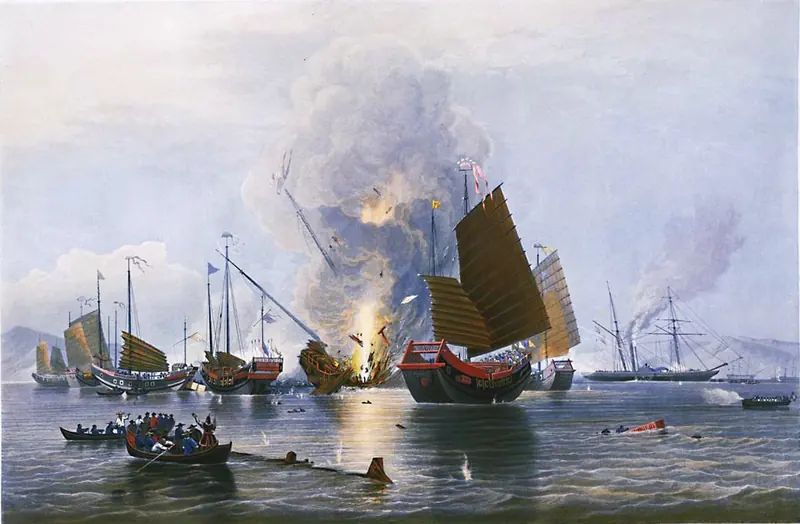
The poppy gives us opium, which takes us back another century. The First Opium War ran from 1839 to 1842, the Second from 1856 to 1860.14 Britain fought Qing China in the first, joined by France in the second, forcing concessions over trade, territory and foreign access.15 “I’ve been obsessed with the Opium Wars for a long time,” Kuang has said, and she imagined a world where the drug is a source of power rather than humiliation.16
She drafted book one after reading about Nanjing, “from a place of rage and anger.”17 Later she came to see the danger in revenge stories, noting that the Chinese Communist Party uses such traumas to stir nationalism.18 Fantasy, in her words, is “a distorted mirror” for working through personal and family trauma.19 She also describes the trilogy as “what if Mao Zedong was a teenage girl?”20 You can probably see why this belongs in a guide to military fantasy.
FAQ
What should I read after The Poppy War?
The Sword of Kaigen by M. L. Wang and Jade City by Fonda Lee are recommended most often, followed by She Who Became the Sun and The Rage of Dragons.
Is The Poppy War based on real history?
Yes. Kuang has said the plot is "mirrored almost entirely on the Second Sino-Japanese War," and book one draws on the Battle of Shanghai, the Nanjing Massacre and Unit 731. The essay above has the details.
Is The Poppy War grimdark?
It is often shelved as grimdark. It opens as an academy story and turns into brutal war, which is why it also appears in our guide to grimdark fantasy.
Sources
- Recommendations: the Instagram posts and websites linked on each card; reader signals from Goodreads and Reddit.
- Book descriptions: publisher descriptions and reviews collected in the site's book catalog.
- History essay: sources in the footnotes.
No books match. Try another word or show all.








 What Flintlock Fantasy Books Get Right About Musket Warfare20 min read
 Matchlock vs Flintlock6 min read
 The History Behind The Poppy War5 min read
 Where Red Rising Comes From4 min read

